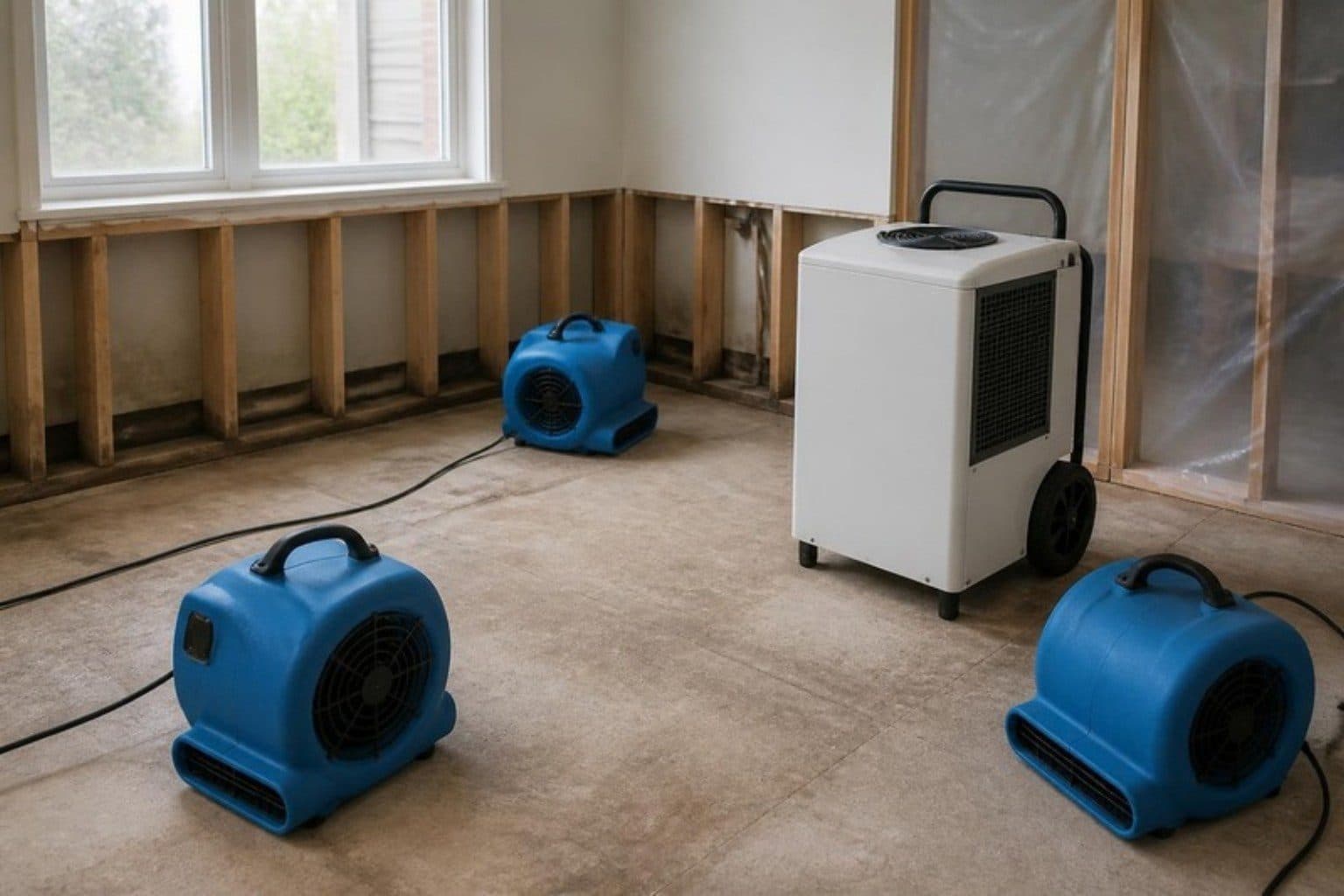
Emergency water damage is one of the most common home insurance claims in Ontario, and the process is more predictable than most homeowners expect. The key facts: call the restoration company first, document everything, and let a company that works with adjusters every week carry the paperwork.
What happens, step by step
- 1
Contact us (24/7)
Call the emergency line first, not your insurer. Stopping the damage quickly is what every policy expects of you, and our crew documents the loss from the moment we arrive.
- 2
We inspect & document
Moisture maps, photos, a video walkthrough, the water category and a written scope. This is the evidence your adjuster needs and it is what gets the claim approved.
- 3
We handle the claim
You sign a Direction to Pay so the insurer pays us directly. We open the claim with you, send the scope in the Xactimate format adjusters use, and meet the adjuster on site.
- 4
We restore your property
Extraction, tear-out, drying and mould prevention, then the rebuild through Rebuild Pro Contracting. You pay only your deductible for covered work.
What does Ontario home insurance usually cover?
Standard Ontario policies cover sudden and accidental escape of water from plumbing, heating or appliances. Sewer backup and overland flood are optional endorsements that many insurers have offered since about 2015, and they must be on your policy before the loss. Your policy wording controls; we read it with you on the first visit.
| Usually covered | Only with an endorsement | Usually excluded |
|---|---|---|
|
|
|
What is a deductible?
Your deductible is the part of any claim you pay yourself. The amount is set in your policy, and some policies carry a separate, higher water damage or sewer backup deductible. It comes off the insurer's payment to us, so you settle it at the end of the job rather than before work starts.
Working with the adjuster
The adjuster confirms the cause of loss, decides what the policy covers and reviews the scope. We prepare that scope in Xactimate, the estimating platform adjusters use, so line items match what they expect to see. We meet them on site, walk through the moisture map and photographs, and answer their questions. You are welcome to be there too. Most residential water claims are approved within days when the documentation is complete.
The Direction to Pay form
A one-page form you sign that instructs your insurer to pay RapidDry Restoration directly for the covered work. It is standard across the restoration industry. It does not change your coverage or your deductible; it only changes who the cheque is made out to, so you never front the cost. We bring it on the first visit and leave you a copy.
What to document before we arrive
- Photos and a short video of the water, the source and every affected room
- Your policy number and the broker or insurer phone number
- Receipts or photos of damaged contents (electronics, furniture, flooring)
- The time you noticed the water and what you did to stop it
Insurance claim FAQ
Who pays for water damage restoration?
For a covered loss your insurance company pays the restoration company, minus your deductible. RapidDry bills the insurer directly, so you are not out of pocket for the emergency work. If the cause is not covered, you pay the restoration company yourself, and we agree the scope with you in writing first.
What is a deductible and when do I pay it?
The deductible is the portion of any claim you pay yourself. The amount is set by your policy, and some policies carry a higher water damage deductible. It is deducted from the insurer's payment, so you settle it with us at the end of the job, not before work starts.
What does an insurance adjuster do?
The adjuster represents the insurer. They confirm the cause of loss, decide what the policy covers and review the scope. We meet them on site, walk them through the moisture map and photos, and answer their questions so the claim moves quickly. You can be present too.
What is a Direction to Pay form?
A Direction to Pay is a short form you sign that instructs your insurer to pay RapidDry directly for the covered work. It is standard in the restoration industry and means you never have to front the cost and wait for reimbursement. We bring it on the first visit.
Should I call my insurance company or a restoration company first?
Call us first. Every policy requires you to mitigate further damage, and every hour water sits raises the cost. We can help you open the claim as soon as the emergency work is under way, and many insurers will ask which restoration company is already on site.
Will my premiums go up if I make a water damage claim?
Possibly. Claims history is one factor insurers use at renewal, and this varies by company. For a small loss below or near your deductible it may be cheaper to pay directly. We tell you honestly when a job is small enough that a claim may not be worth it.
What is not covered by home insurance?
Common exclusions in Ontario are gradual leaks, seepage through the foundation, wear and tear, frozen pipes when the heat was off and the home unchecked, and sewer backup or overland flood when the endorsement was not purchased. Your policy wording controls. We will read it with you.