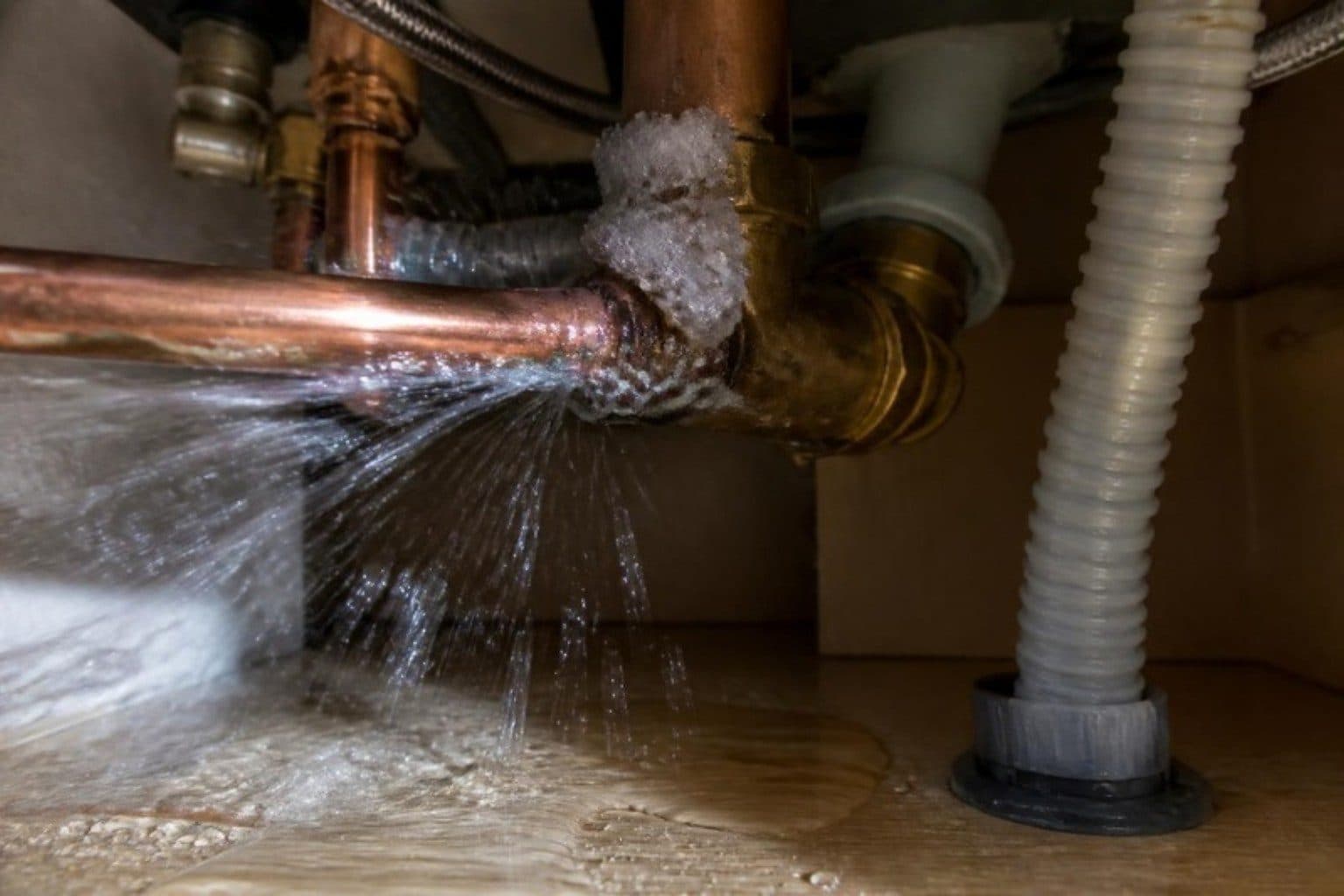
A burst pipe releases a lot of water very fast. A 12 mm supply line at normal household pressure can put out more than 30 litres a minute, which is close to 2,000 litres an hour flowing into a ceiling, a wall cavity, or a finished basement. It is the most common cause of major water damage we see in Toronto between December and March, and it is almost always a freeze that starts it.
Toronto averages more than 60 freeze-thaw cycles a winter. Pipes in exterior walls, garages, crawlspaces and under kitchen sinks on outside walls are the first to freeze. The pipe does not usually burst while frozen. It bursts when the ice plug thaws and pressure returns, which is why so many of these calls come during the first mild day after a cold snap, often while the homeowner is at work.
Our crews respond from a 24/7 live line to Toronto, North York, Etobicoke, Scarborough, Mississauga, Vaughan, Thornhill, Richmond Hill and Markham. Our target is to be on site within 60 minutes. We extract, dry, remove what cannot be saved, and bill your insurer directly.
What we do on site
- Verify the main valve is closed and the lines are drained before starting.
- Map the water path with thermal imaging and moisture meters from the burst point down through every floor it reached.
- Extract standing water from floors and pull baseboards to release water trapped behind walls.
- Remove saturated insulation and any drywall that cannot dry in place, bagging it for disposal.
- Set air movers and dehumidifiers sized to the cavity and room, and take baseline readings.
- Return daily to log moisture readings and adjust equipment until the framing reaches dry standard.
- Photograph and document each stage, complete the Direction to Pay, and hand off to Rebuild Pro Contracting for reconstruction.
What should I do if a pipe bursts in my house?
Turn off the main water shutoff first. In most Toronto homes it is a valve near the water meter in the basement, close to the front wall. If you cannot find it or it will not turn, call the City of Toronto to shut off at the curb. Then open the lowest faucet in the house to drain the lines and relieve pressure. If water is coming through a ceiling, poke a small hole to let it drain into a bucket rather than letting the whole ceiling sag and collapse.
Call our 24/7 emergency line next. Do not wait until the morning. Every hour water sits in a wall cavity is more insulation and drywall that cannot be saved, and after 48 hours mould becomes a real factor.
- Close the main shutoff valve, then open a low faucet to drain the lines
- Cut power to the affected area if outlets or fixtures are wet
- Relieve sagging ceilings with a small drain hole into a bucket
- Move contents out of the path of the water
- Call our 24/7 emergency line, then a plumber for the pipe repair
My pipe is frozen but has not burst yet. What now?
Keep the faucet on that line open so water can move as the ice melts and pressure has somewhere to go. Warm the pipe slowly with a hair dryer, a heating pad, or towels soaked in hot water, working from the faucet end toward the frozen section. Never use an open flame. Open cabinet doors under sinks on exterior walls and let warm room air reach the pipe.
If the pipe has a bulge or a visible split, it has already failed and will leak once it thaws. Shut the main valve and call a plumber. If you are unsure, shut the main anyway. We would rather you call us for a small clean-up than a full basement.
How do you dry out a wall or ceiling after a burst pipe?
Burst-pipe water is IICRC Category 1, clean supply water, which gives us the widest range of drying options. The problem is location. The water is inside wall and ceiling cavities, not on the floor. We map the wet area with a thermal camera and moisture meters, then remove baseboards and drill weep holes, or cut a strip of drywall along the bottom of the wall, so air can move through the cavity.
Wet fibreglass or cellulose insulation holds water against the studs and does not dry in place, so it comes out. Drywall that has been wet for less than a day or two can often be dried. Drywall that is soft or sagging cannot. We set air movers and dehumidifiers, log readings daily, and stop when the framing reads dry. Most burst-pipe losses dry in 3 to 5 days.
Does home insurance cover a burst pipe in Ontario?
Almost always, with one major condition. Sudden and accidental escape of water from plumbing is a standard peril on Ontario home policies. The condition is the freezing clause. Most policies exclude damage from freezing if you were away for more than a set period, commonly four consecutive days, and did not either shut off the water supply and drain the pipes or arrange for someone to check the home daily and keep the heat on. Check your policy wording for the exact number of days.
The pipe repair itself is generally not covered. The damage it caused, including extraction, drying, tear-out, and rebuild, is. We document the source, the heat status of the home and the extent of damage so the claim moves quickly.
Which pipes in a Toronto house are most likely to freeze?
Supply lines in exterior walls, especially kitchen sinks on the north side. Pipes in unheated garages, crawlspaces and attics. Outdoor hose bibs that were not drained and shut off inside before winter. Lines in basements of older homes with uninsulated rim joists. In many post-war bungalows in Scarborough and Etobicoke, the bathroom stack sits in an exterior wall with almost no insulation behind it. Fixing that once, with insulation and a heat cable, costs far less than a single loss.
Burst and leaking pipes fall under sudden and accidental water escape, a standard peril on Ontario home policies. The exclusion to know is the freezing clause. If the home was unoccupied beyond the policy's stated period, often four consecutive days, coverage usually depends on whether you shut off and drained the water or had someone checking the home and maintaining heat. Insurers pay for the damage but generally not the pipe repair. We bill your insurer directly through a Direction to Pay, and you cover only your deductible.
Frequently asked questions
How long does it take for a pipe to freeze in a Toronto winter?
An uninsulated pipe in an exterior wall can freeze in 6 to 8 hours once outdoor temperatures drop below about minus 6 Celsius, faster with wind. Pipes in heated interior spaces almost never freeze. Risk goes up sharply during multi-day cold snaps and when a furnace fails overnight, which is why a frozen pipe is often the first sign of a heating problem.
Do I need a plumber or a restoration company first?
Both, but call us first if water is still spreading. We can stop the spread, protect what can be saved, and start extraction while the plumber is on the way. If the water is already shut off and contained, call the plumber for the repair and us for the drying. We coordinate with plumbers regularly across the GTA.
Can you dry a wall without removing the drywall?
Often, yes, if the water was clean and the drywall has been wet for less than about 48 hours. We remove the baseboard, drill weep holes or cut a narrow strip at the bottom, and force air through the cavity. Wet insulation still has to come out. If the drywall is soft, stained through, or has been wet for days, it is more reliable and usually cheaper to replace it.
Will my insurance deny the claim because I was on vacation?
Not automatically. The freezing clause in most Ontario policies applies only if you were away longer than the stated period, often four consecutive days, and did not shut off the water or arrange for someone to check the home. If you had a neighbour or family member checking daily, or if the water was shut off, the claim is normally covered. Keep any messages or records that show the checks happened.
How do I stop this from happening again?
Insulate any supply lines in exterior walls, garages and crawlspaces. Shut off and drain outdoor hose bibs each fall. Keep the thermostat at 15 Celsius or higher when you are away, and open cabinet doors on exterior-wall sinks during cold snaps. If you leave for more than a few days in winter, shut off the main and drain the lines. A smart water leak sensor with an automatic shutoff is inexpensive and many insurers offer a discount for one.