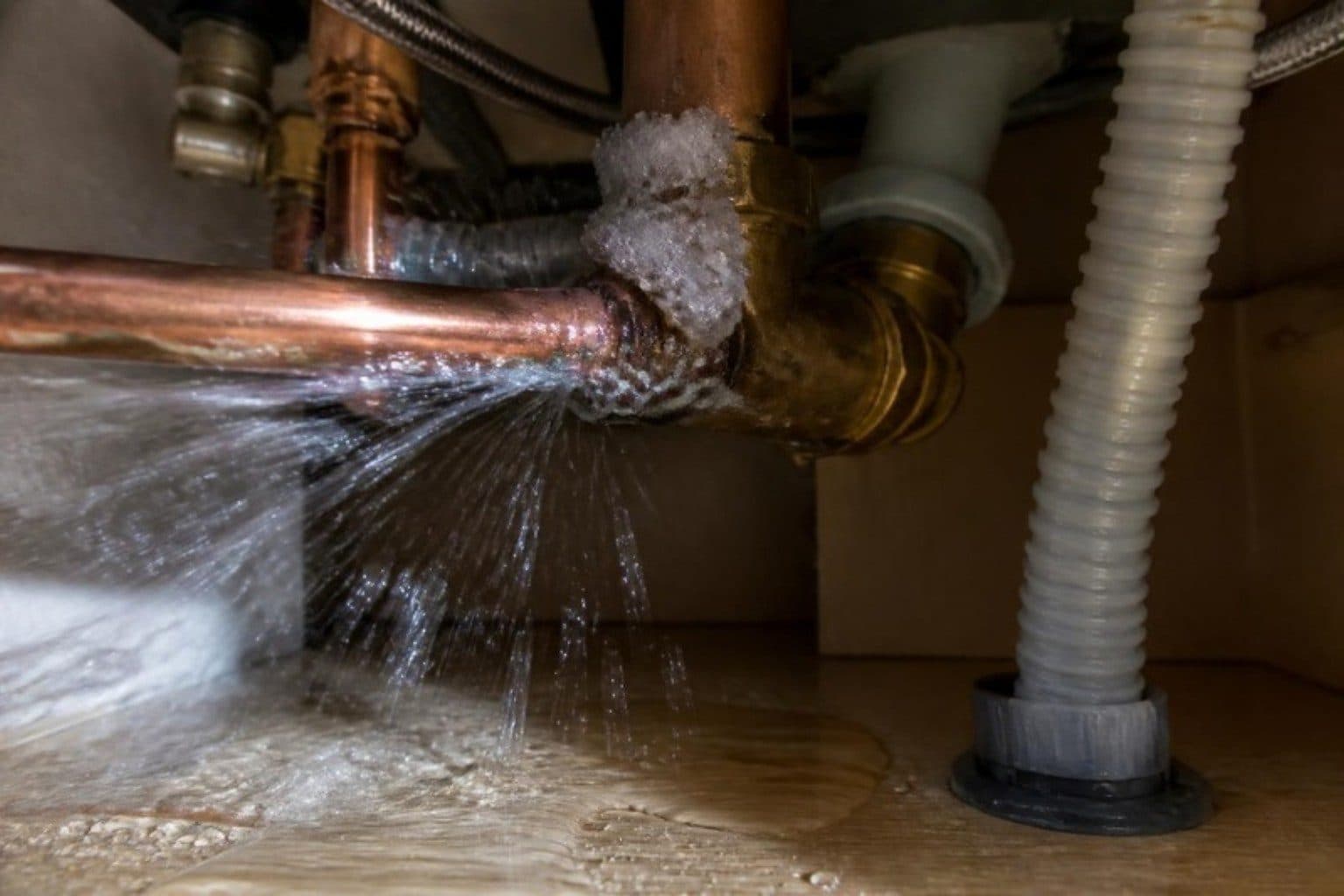
Burst pipes and sewer backups are the two most common causes of a flooded basement in Toronto, and insurers treat them completely differently. A burst pipe is an internal plumbing failure, which every standard policy covers. A sewer backup is water or sewage entering from the drain system, which is an optional endorsement in Ontario and has been since around 2015. The cleanup is also different, because sewage is Category 3 water under the IICRC S500 standard. Here is how the two compare on coverage, cost and what happens on site.
Burst pipe vs. sewer backup at a glance
| Comparison | Burst pipe | Sewer backup |
|---|---|---|
| Where the water comes from | Supply line, heating pipe, appliance hose or water heater | Floor drain, toilet, shower or basement fixture |
| Water category (IICRC S500) | Category 1 clean; becomes Category 2 if it sits | Category 3 black water |
| Standard Ontario policy | Covered as sudden and accidental escape of water | Not covered without an endorsement |
| Optional endorsement needed | No | Yes, sewer backup coverage |
| Common conditions | Heat maintained or water shut off when away in winter | Backwater valve may be required for full limits |
| Coverage limit | Usually the full dwelling and contents limits | Often a separate sub-limit |
| Deductible | Standard policy deductible | May be separate and higher |
| Materials usually removed | Only what cannot be dried | Everything porous the water touched |
How is a burst pipe covered?
Standard Ontario home insurance covers the sudden and accidental escape of water from plumbing, heating, air conditioning and sprinkler systems and from household appliances. A pipe that splits, a solder joint that fails or a washing machine hose that lets go all qualify. The policy pays for extraction, drying, removing and replacing damaged building materials, and damaged contents, minus your deductible. The pipe repair itself is often excluded, although the cost of opening the wall to reach it is usually covered. Gradual leaks that dripped for weeks are excluded, so report leaks the day you find them.
What conditions apply to frozen pipes?
Frozen pipes are the main exception. During the heating season, most Ontario policies require that if you are away from home for more than a few days, you either shut off the water and drain the system, or arrange for someone to check the house regularly to confirm the heat is on. A four consecutive day rule is common, though intervals differ between insurers. If a pipe freezes while the house sat empty and unchecked, the claim can be denied. If you are travelling in winter, keep a written log of who checked the house and when.
Shut off the main valve, cut power to the wet area if you can do so safely, photograph the split pipe and the damage, call our 24/7 emergency line, then report the claim. Keep the damaged section of pipe. Adjusters sometimes ask to see it to confirm the failure was sudden.
How is sewer backup covered?
Sewer backup coverage is an endorsement added to the policy for an extra premium. It responds when water or sewage enters through drains, toilets or fixtures because the municipal sewer, your lateral or a septic system cannot carry the flow. Toronto's older combined sewers and heavy summer storms make this a frequent claim, especially in low-lying neighbourhoods. The endorsement usually has its own limit and sometimes its own deductible. Some insurers require a backwater valve before offering full limits, and some offer premium discounts once one is installed. If you do not have the endorsement, a sewer backup is paid out of pocket.
Why does sewer backup cleanup cost more?
Sewage is Category 3 water. Under the IICRC S500 standard, anything porous it contacts is removed and disposed of, not dried. That means carpet, underpad, drywall, insulation, particleboard cabinets and most upholstered furniture. Hard surfaces are cleaned and disinfected, and air scrubbers with HEPA filtration run during the work. The crew wears full protective equipment, and the debris is handled as contaminated waste. The rebuild afterward is a separate scope.
How can you tell which one you have?
- Water is clear and coming from a wall, ceiling or a visible pipe: burst pipe
- Water is coming up through the floor drain, a basement toilet or a shower: sewer backup
- It is raining hard or snow is melting fast and the water is grey or smells: sewer backup or overland water
- Water appeared after a cold snap and a section of pipe is split or bulging: frozen and burst pipe
- Water is seeping through the floor or the wall joint with no rain: groundwater seepage, usually excluded
The distinction matters because it changes which coverage applies, and sometimes whether any applies. If you are unsure, do not guess when you report the claim. Describe what you saw and let the restoration crew and adjuster determine the cause. RapidDry Restoration documents the source with photos and, where needed, leak detection, and that report becomes part of the claim file. Misreporting the cause, even innocently, can delay a claim.
What does the claim process look like for each?
- Make the area safe: cut power if you can do it without stepping in water, and stay out of sewage
- Stop the source: shut the main valve for a burst pipe; stop using water in the house for a backup
- Photograph and video everything before cleanup
- Call a 24/7 restoration company; RapidDry Restoration aims to be on site within 60 minutes across Toronto and the GTA
- Report the claim, describe the cause accurately, and ask which coverage and deductible apply
- Sign a Direction to Pay so the restoration company bills the insurer and you pay only the deductible
- Keep the sewer backup sub-limit in mind; if cleanup and rebuild exceed it, the balance is yours
How do you make sure you are covered for both?
Read your declarations page and look for sewer backup and overland water. If neither appears, call your broker and ask for a quote. The premium is usually modest compared to the cost of one uncovered backup. Install a backwater valve and a sump pump with battery backup, and disconnect downspouts from the sewer. The City of Toronto Basement Flooding Protection Subsidy Program helps pay for these devices. For burst pipes, insulate pipes on exterior walls, keep the heat on when away and replace rubber appliance hoses with braided steel. If water is entering through the foundation, DryFort Waterproofing can fix the root cause.
Whichever type of loss you face, the cleanup follows the same principle: extract fast, remove what cannot be dried, dry the structure to a measured standard, and only then rebuild. Rebuild Pro Contracting handles the rebuild phase once RapidDry Restoration confirms the basement is dry, so one claim moves through both stages without a gap.
Frequently asked questions
Is a sewer backup ever covered without the endorsement?
Rarely. Some insurers bundle sewer backup into premium policy packages, so check your declarations page. If the backup was caused by a blockage in your own drain line from a sudden event, a few policies treat it differently, but you should not count on it. If the words sewer backup do not appear on your policy, assume it is not covered and ask your broker.
Does a burst pipe claim cover replacing the pipe?
Usually not. Most policies exclude the cost of repairing the part that failed, in the same way they exclude a worn-out roof. They do cover the damage the water caused and the cost of opening walls or floors to reach the pipe. The plumber's bill for the repair itself is typically yours, though it is small compared to the restoration.
What if a sewer backup happens while I am on vacation?
Report it as soon as you find it and document the timeline. Sewer backup endorsements do not usually carry the checked-every-few-days condition that applies to frozen pipes, but the longer sewage sits, the more materials must be removed and the higher the cost against your sub-limit. Ask a neighbour to check the basement during heavy summer storms if you are away.
Can I claim both a burst pipe and a sewer backup from the same event?
Yes, if both happened. A storm can cause a sewer backup while a separate pipe fails, or a backup can be discovered during a burst pipe cleanup. Each is assessed under its own coverage and deductible. The restoration crew's report on the source of each water intrusion is what the adjuster uses to split the claim.
Does installing a backwater valve lower my premium?
Some insurers offer a discount or a higher sewer backup limit once a backwater valve is installed, and a few require one before offering the endorsement at all. Ask your broker before installation and keep the plumber's invoice and the City permit. Toronto's Basement Flooding Protection Subsidy Program covers part of the cost.