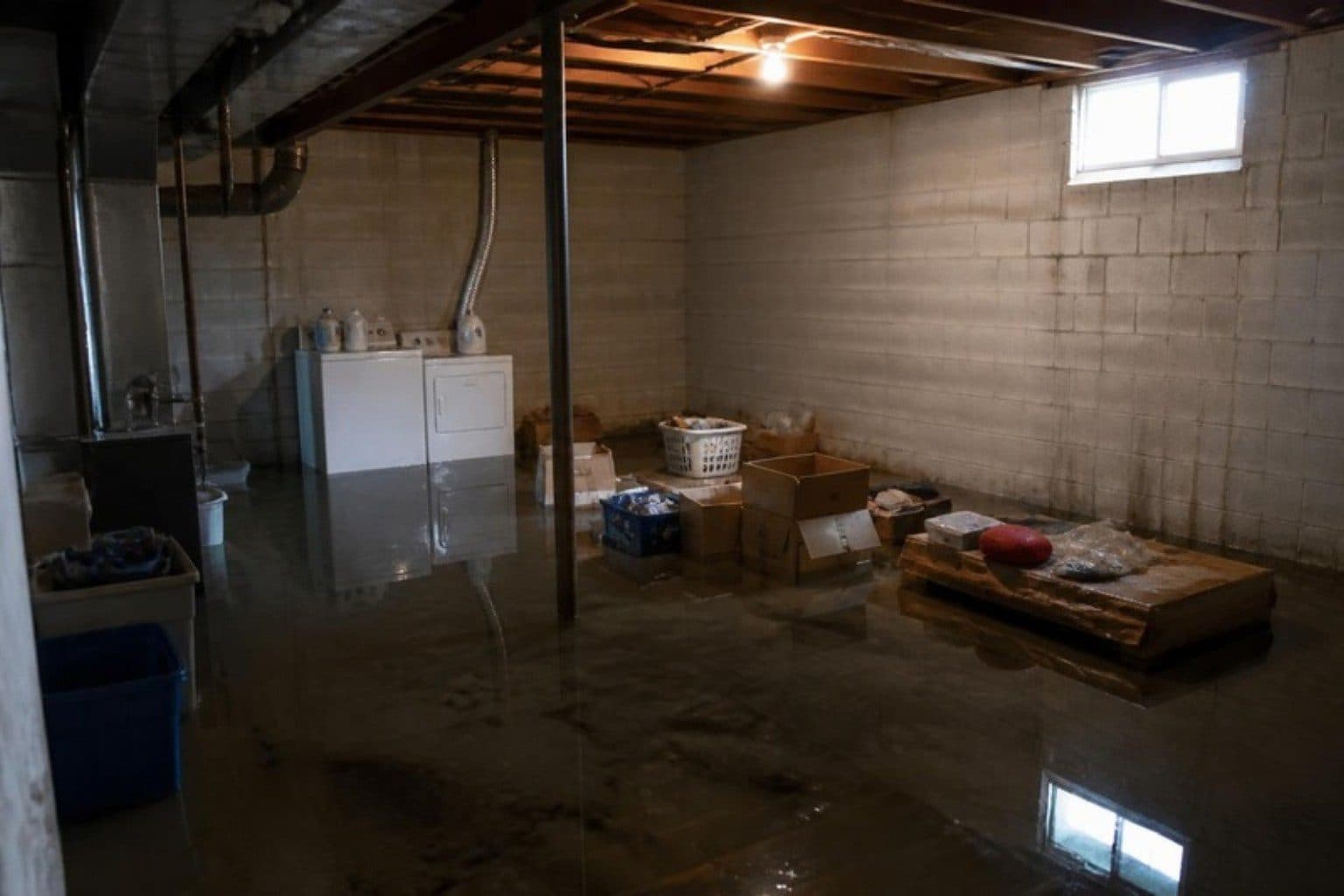
Why does the first hour matter so much?
Water keeps moving. In the first hour it wicks up drywall, soaks into subfloor and framing, and spreads under flooring where you cannot see it. Every hour of delay widens the area that needs drying and raises the chance that materials must be torn out instead of dried. Mould can begin growing on wet drywall and wood within 24 to 48 hours. Insurers also expect you to act promptly to limit further damage. What you do in the first 60 minutes shapes the repair bill, the drying time, and how smoothly your claim goes.
Step 1: Keep everyone out of the water
Do not walk into standing water in a basement until you know the power is off. Water conducts electricity, and a submerged outlet, extension cord or appliance can energise the whole pool. If the water is near the electrical panel, or you would have to step through water to reach the panel, stay out and call your utility to cut power at the meter. Keep children and pets upstairs. If you smell gas, leave the house and call the gas utility from outside.
If the water is coming up through a floor drain, toilet or shower, treat it as sewer backup. Under the IICRC S500 standard this is Category 3 water, which carries bacteria and pathogens. Do not touch it without gloves and boots, keep it away from your face, and leave the cleanup to a crew with proper protective equipment.
Step 2: Stop the water at its source
Once the area is safe, find where the water is coming from. A burst supply pipe or failed appliance hose can be stopped at the main shut-off valve, usually near the water meter where the service enters the house. Turn it clockwise until it stops. If the flood is from outside, such as rain overwhelming a window well or seeping through the foundation, there is nothing to shut off, so focus on directing water away from the house by clearing downspouts and window wells. If it is sewage, do not run any water in the house, including flushing toilets, until the backup clears.
- Main shut-off: near the water meter where the pipe enters the basement
- Water heater: cold-water valve on top of the tank
- Washing machine: hot and cold valves behind the machine
- Toilets and sinks: small valve on the supply line under or behind the fixture
Step 3: Document everything before you touch anything
Your insurer will want proof of what happened and what was damaged. Before moving anything, take wide photos of each room, then close-ups of the water line on walls, damaged flooring, furniture, boxes and appliances. Record a slow video walk-through and narrate what you see. Photograph the source of the water, whether that is a split pipe, a failed sump pump or a floor drain. Note the time you discovered the flood. Keep damaged items until the adjuster has seen them or given permission to dispose of them.
Step 4: Call for emergency water extraction
Call a 24/7 restoration company as soon as the house is safe and the water is stopped. If the water is still rising, call before you call your insurer. RapidDry Restoration dispatches crews across Toronto and the GTA with a target of being on site within 60 minutes. The crew removes standing water with truck-mounted and portable extractors, then sets up air movers and dehumidifiers. Fast extraction is the single biggest factor in whether drywall and flooring can be saved or must be removed.
Step 5: Notify your insurer and start the claim
Call your insurance company's claims line or use their app to open a claim. Give them the date, time, cause and a short description of the damage. Ask whether the policy covers this type of water loss and what your deductible is. Most Ontario home policies cover sudden and accidental escape of water from plumbing or appliances. Sewer backup and overland flooding are optional endorsements, so check whether you have them. Tell the insurer which restoration company is attending. A Direction to Pay form lets the restoration company bill the insurer directly, so you pay only the deductible.
What can you do while you wait for the crew?
- Move dry furniture, electronics and boxes upstairs or onto blocks
- Lift curtains and drapes off the floor
- Remove rugs from wet areas if the water is clean and the floor is safe
- Open windows if outdoor humidity is low, and run a dehumidifier if you have one
- Do not use a household vacuum on water, and do not run the furnace if ductwork is wet
- Do not turn on ceiling fans or lights in the flooded area until an electrician has checked them
What should you not do in the first hour?
| Common mistake | Why it hurts | Do this instead |
|---|---|---|
| Wading in to rescue belongings | Risk of shock from submerged outlets and cords | Cut power first or wait for the utility |
| Throwing out wet items right away | Insurers need to see the damage to value it | Photograph, list, then set aside until the adjuster approves disposal |
| Using a shop vac on sewage | Spreads Category 3 contamination and aerosolises bacteria | Leave sewage extraction to a crew with protective equipment |
| Waiting until morning to call | Mould can begin within 24 to 48 hours; drywall wicks water upward | Call a 24/7 line as soon as the house is safe |
| Running the furnace or air conditioner | Pushes moist air and contaminants through the ducts | Leave the HVAC off until the crew checks the ducts |
What happens after the first hour?
The restoration crew will assess the water category and class, extract standing water, and decide what can be dried in place. Clean water on tile may need only extraction and a few days of drying. Sewage or water that sat for more than a day usually means drywall, insulation and carpet come out. Structural drying with air movers and dehumidifiers typically takes three to five days, with daily moisture readings. If the cause is a foundation crack or a missing backwater valve, DryFort Waterproofing can fix the root cause, and Rebuild Pro Contracting handles the rebuild once everything is dry.
One more thing to do once the immediate crisis is over: write down the timeline while it is fresh. When you found the water, when you shut it off, when you called, who came and what they did. Adjusters ask these questions, sometimes weeks later, and a clear record makes the claim easier for everyone.
Frequently asked questions
Should I call the restoration company or my insurer first?
If water is still coming in, call the restoration company first so extraction starts, then call your insurer once the crew is on the way. If the water has stopped and the area is safe, the order matters less. Either way, tell the insurer which company is attending and ask about a Direction to Pay so the company can bill the insurer directly.
Is it safe to go into a flooded basement if the water is only an inch deep?
Only if you are certain the power to that area is off. Even shallow water can be energised by a submerged extension cord, a power bar or a sump pump plug. If you cannot reach the panel without stepping in water, wait for your utility or an electrician. If the water is from a floor drain or toilet, treat it as contaminated regardless of depth.
Can I use my own wet vac and fans?
For a small amount of clean water on a hard floor, a wet vac and fans can help while you wait. For anything larger, or any water from drains, sewers or outside, do not. Household equipment cannot dry inside walls or under floors, and moving sewage-laden water spreads contamination. A professional crew uses moisture meters to confirm materials are actually dry.
What if I discover the flood after the water has already been sitting for a day?
Call right away. Water that has sat for 24 hours or more is treated as Category 2 or 3 under the IICRC S500 standard, and mould growth may have begun. The crew will remove porous materials that cannot be safely dried, apply antimicrobial treatment and dry the structure. Document the timeline honestly for your insurer, since delays in reporting can affect a claim.