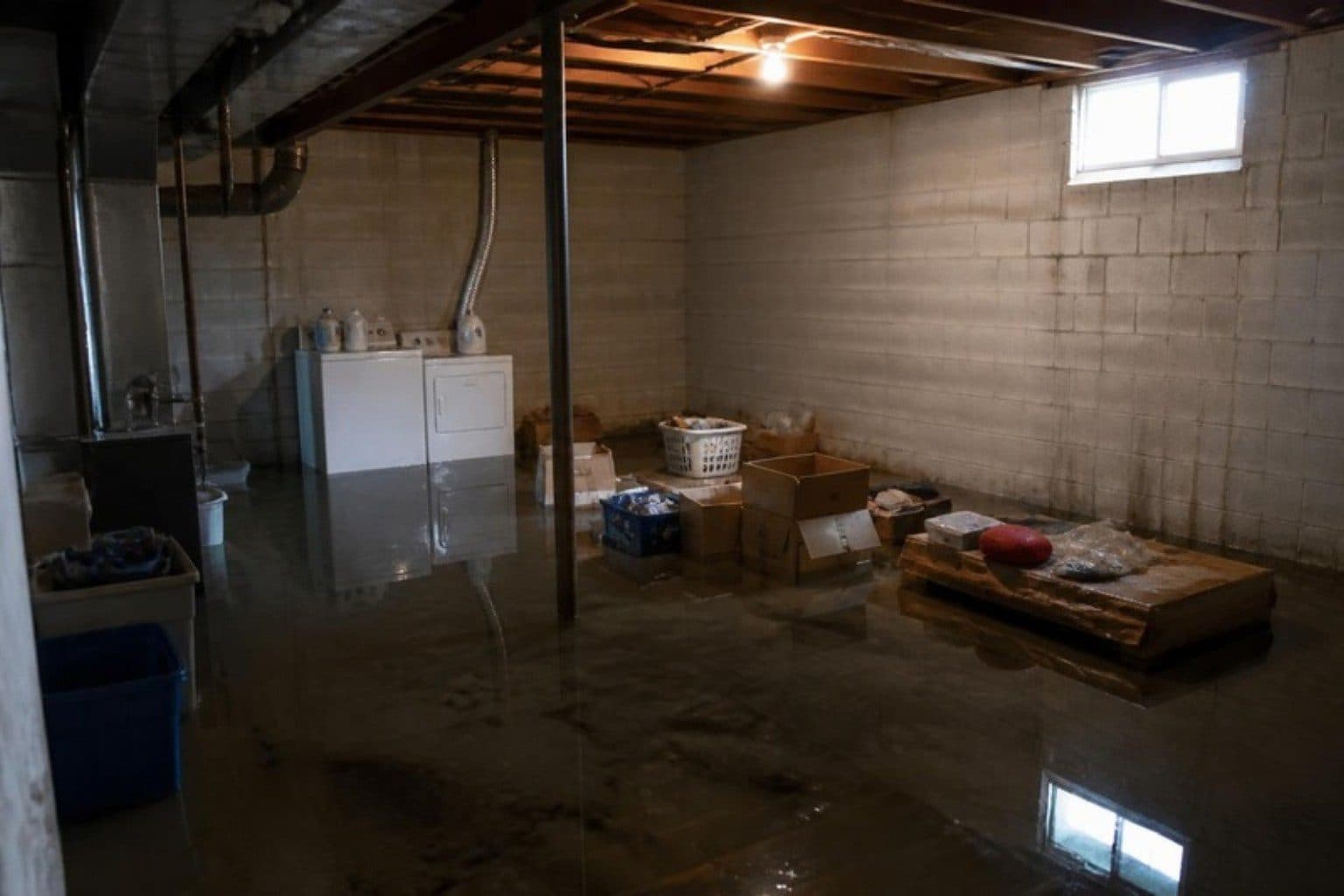
Basements flood for four main reasons in Toronto: a plumbing failure inside the house, a sewer backup during heavy rain, groundwater coming through the foundation, and a sump pump that quit when it was needed most. Each has a different cleanup, a different insurance answer and a different fix. The first thing we do on site is figure out which one you have, because it decides whether we can dry finishes in place or everything below the water line has to come out.
The City of Toronto has recorded some of its worst basement flooding in the past two decades, including the storms of August 2005, July 2013 and July 2024, when parts of the city received more than 100 mm of rain in a few hours. The old combined sewers in central Toronto and the low-lying pockets of North York, Scarborough and Etobicoke are the most exposed, but a failed sump or a burst pipe can flood any basement in any weather.
We serve the whole GTA from a 24/7 live line. Crews carry pumps, extractors, drying equipment and containment so the first visit is a working visit. If the water came through the foundation, our sister company DryFort Waterproofing addresses the entry point. When drying is done, Rebuild Pro Contracting puts the basement back.
What we do on site
- Confirm power is safely off to the basement and identify the water source and category.
- Pump out standing water with submersibles, then extract floors with truck-mounted units.
- Remove and bag carpet, pad, laminate, wet drywall and insulation that cannot be saved, with photos of each area before removal.
- Inventory damaged contents and separate what can be cleaned from what is a write-off for the claim.
- Clean and apply antimicrobial treatment to the slab, framing and remaining surfaces, especially for Category 2 and 3 water.
- Set air movers and dehumidifiers, establish drying goals for each material, and monitor daily.
- Complete the Direction to Pay, submit the loss report, and schedule Rebuild Pro Contracting for the rebuild when the space reads dry.
Is it safe to go into a flooded basement?
Not until you have answered two questions. Is the power off to that level, and where did the water come from. Water touching outlets, the furnace, the panel or an extension cord can be live. If the panel is in the basement and you cannot reach it without stepping in water, stay out and call your utility or an electrician. If the water smells like sewage or came in from outside, it is IICRC Category 3 and contains bacteria and possibly chemicals. Do not wade through it in bare feet or handle contents without gloves.
If you can confirm the power is off and the source is clean, such as a burst supply line, it is reasonable to move items out of the water and get the main valve shut. Otherwise, wait for us. We arrive with the boots, gloves and pumps to handle it safely.
How much of my basement will have to be torn out?
It depends on the water category and how long it sat. With clean water pumped out within a day, carpet and drywall can often be dried in place, and we only cut out what the moisture readings say is beyond saving. With grey or black water, everything porous the water touched comes out: carpet and pad, laminate, the bottom 30 to 60 cm of drywall, insulation, and lower kitchen or bathroom cabinets. Concrete floors and framing are cleaned and treated, not removed.
We do not tear out on instinct. Every removal decision is backed by a moisture reading or a contamination category, and it is photographed for your claim before it leaves the house. That documentation is what makes the insurer approve the rebuild scope without a fight.
- Clean water, under 48 hours: dry in place where readings allow
- Clean water, over 48 hours: drywall and pad usually removed, framing dried
- Grey or black water: all porous materials below the water line removed
- Concrete, block and framing: cleaned, treated and dried, not replaced
Why does my basement keep flooding every time it rains hard?
Repeat flooding in rain is a drainage or sewer problem, not bad luck. In older Toronto neighbourhoods with combined sewers, a heavy storm overwhelms the main and pushes water up the floor drain. In newer areas, the usual culprits are a downspout still tied into the weeping tile, a clogged weeping tile, a sump pump without battery backup, or foundation cracks below grade. Grading that slopes toward the house adds to all of them.
The City of Toronto Basement Flooding Protection Subsidy Program helps pay for a backwater valve, a sump pump and downspout disconnection for eligible homes. Vaughan, Markham and Mississauga run similar programs. After cleanup, DryFort Waterproofing can inspect the foundation and drainage and give you a plan so the next storm is not another claim.
How long does a flooded basement take to dry?
Most residential basements dry in 3 to 5 days once extraction and tear-out are done. A basement with concrete floors and open framing dries at the fast end. Finished basements with saturated subfloor, dense insulation or a lot of built-ins take longer, sometimes 7 to 10 days. The variables are how much wet material is still in the space, the humidity we are fighting, and how well we can move air through it.
We do not guess. A technician returns daily to take moisture readings at fixed points and logs them. Equipment comes out when the readings hit the dry standard for that material, not when the floor looks dry.
Coverage for a flooded basement in Ontario depends entirely on the source. A burst pipe, failed water heater or appliance is sudden and accidental water escape and is covered on a standard policy. Water backing up through a floor drain or toilet needs the sewer backup endorsement. Water entering from outside, through windows, walls or over the foundation, needs the overland flood endorsement. Groundwater seeping through cracks is generally excluded. We identify and photograph the source on the first visit so the adjuster has a clear answer, and we bill your insurer directly through a Direction to Pay.
Frequently asked questions
What is the first thing I should do when my basement floods?
Stay out of the water until you know the power is off and the source is not sewage. Shut the main water valve if a pipe is the cause. Then call our 24/7 emergency line. Take photos from the stairs if you can do so safely. Do not start moving contents through contaminated water or running fans until we have assessed the category.
Can I dry a flooded basement myself with fans and a dehumidifier?
For a small clean-water leak, possibly. For a basement that had standing water, no. Household dehumidifiers cannot keep up with the moisture load, and fans alone push humid air into the rest of the house. Wet drywall, insulation and pad do not dry in place with consumer equipment, and mould starts within 48 hours. Professional extraction and commercial drying equipment finish in days what a household setup cannot finish at all.
My sump pump failed. Is that covered?
Sump pump failure is not covered on a standard Ontario policy because the water is groundwater. Many insurers offer a sump pump failure or water backup endorsement that covers it, and it is often bundled with sewer backup coverage. Check your declarations page for the endorsement. Regardless of coverage, install a battery backup pump. It is the single most effective protection for a finished basement.
Will my basement smell after it is dried?
Not if the cleanup is done properly. Lingering odour after a flood means something is still wet or contaminated material was left behind. We remove all porous material that touched grey or black water, treat the remaining surfaces with an antimicrobial, and dry the structure to a measured standard. If the smell returns later, that points to a moisture source that was not fixed, and we can help trace it.
Do you also fix the reason the basement flooded?
For plumbing failures we coordinate with a plumber. For water coming through the foundation, sump problems or drainage issues, our sister company DryFort Waterproofing handles crack injection, weeping tile, sump pump installation and backwater valves. They can also help you apply for the City of Toronto basement flooding subsidy where it applies.